What UAE Investors Look For in a Pitch Deck in 2025
Dubai's family offices and VC ecosystem have distinct expectations. A pitch that raised capital in San Francisco may not land the same way in the DIFC - here is why, and how to adapt.
Sneha Nair
Investor Readiness Lead
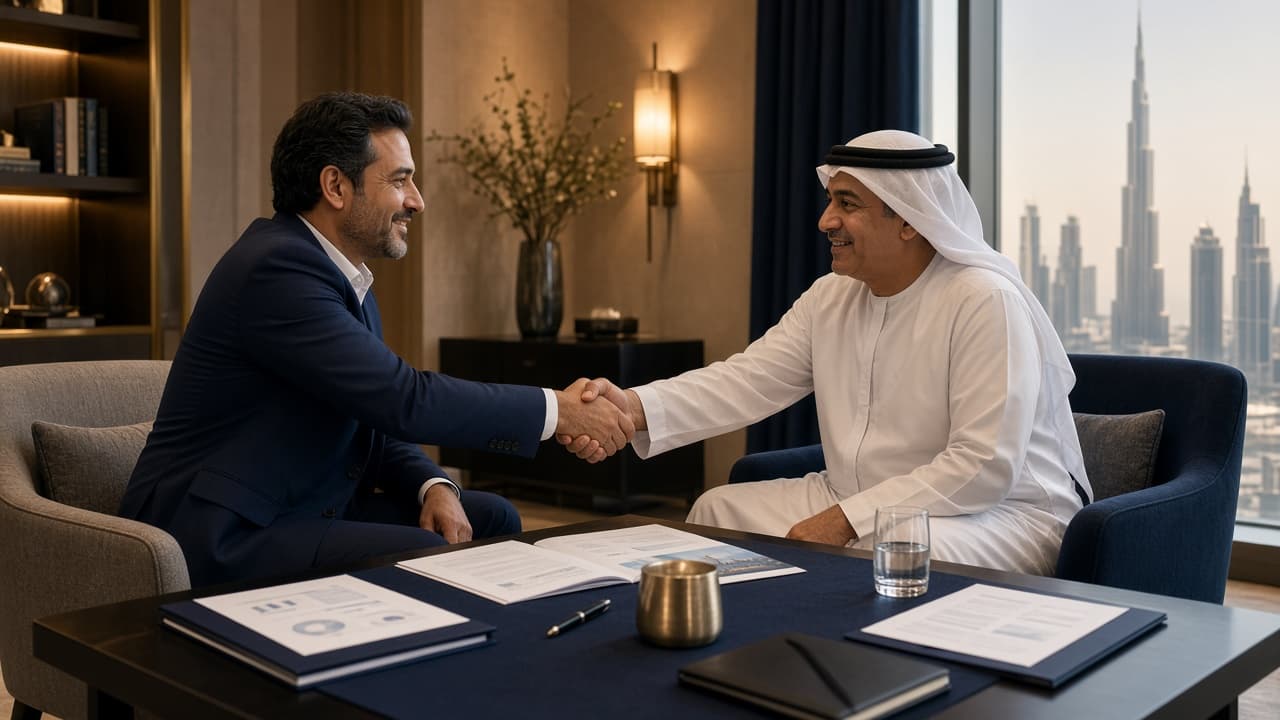
The DIFC ecosystem is not Silicon Valley - and that is not a problem
Founders often walk into DIFC meetings with a deck optimised for Sand Hill Road and wonder why the room feels cooler than expected. The mismatch is rarely about ambition. UAE investors operate inside a different capital structure, risk culture, and time horizon. Family offices, regional VCs, and strategic corporates sit alongside global funds - and the blend means pattern-matching from Silicon Valley can obscure more than it clarifies. Success here is not about copying a Bay Area narrative; it is about translating a real business into the language this ecosystem uses to underwrite risk.
That difference is an advantage if you lean into it. Decision cycles can be relationship-led and surprisingly fast once trust is established. Investors who understand GCC distribution, regulatory pathways, and regional customer behaviour can open doors that pure financial capital cannot. The founders who raise well in Dubai are usually the ones who respect local diligence norms, show regional credibility, and stop apologising for not being a consumer hypergrowth story from California.
What UAE investors evaluate differently
Regional context
Family offices remain a major capital source across the UAE and wider GCC. Many evaluate opportunities through the lens of long-term ownership, reputation risk, and strategic adjacency to existing holdings - not only through classic venture power-law framing. Expect questions about governance, downside protection, and how your company behaves as a partner inside a broader portfolio.
Market sizing that stops at a single city will not survive scrutiny. Strong decks size the opportunity GCC-wide, then show a sequenced path - UAE beachhead, Saudi expansion, then adjacent markets - with realistic assumptions about procurement, localisation, and competitive intensity in each. Investors have seen too many slides that paste a global TAM over Dubai and call it a plan. Show bottoms-up logic tied to named buyer segments and credible expansion gates.
Regulatory posture is another differentiator. UAE investors increasingly reward founders who are proactive about licensing, data, and sector rules rather than hand-waving them. A short, confident explanation of your entity structure, compliance roadmap, and any regulated-activity dependencies builds trust. On team slides, regional operating experience and advisors with local networks often matter as much as brand-name logos from abroad. Capability to execute in this market is part of the product.
Unit economics should be framed in GCC pricing reality. Gross margins, payback periods, and sales capacity modelled only on Western SaaS benchmarks can look disconnected when enterprise deal sizes, discounting norms, and implementation costs differ. Show cohort logic in AED or clearly dual-currency terms, explain pilot-to-contract conversion, and be honest about services mix if implementations are part of early revenue. Credibility beats optimism theatre.
The 10 slides that matter most in a UAE pitch deck
You can carry a longer appendix, but these ten slides do the heavy lifting in most first meetings. Keep each one opinionated and specific.
- Problem: a sharp, locally recognisable pain with evidence from UAE or GCC buyers - not a generic global frustration.
- Solution and product: what you do, for whom, and why it is defensible in this market now.
- Market: GCC-aware sizing with a clear beachhead and expansion sequence.
- Traction: revenue, pilots, logos, retention, or design-partner proof - with dates and commercial status.
- Business model: pricing in regional context, packaging, and path from pilot to recurring contract.
- Go-to-market: relationship-led acquisition, partners, and sales motion that matches enterprise reality here.
- Competition: honest map of global and regional alternatives, plus why you win specific deals.
- Regulatory and operating setup: entity, licensing posture, data stance, and material compliance risks managed.
- Team: operators and advisors who can execute in the UAE and GCC, not only impressive remote credentials.
- Ask: capital amount, use of funds, milestones for the next 18 months, and what investors unlock beyond cash.
The questions to prepare for - because they will come
Anticipate these questions before the meeting. Vague answers erode trust faster than imperfect metrics.
- Why the UAE first? Be ready with customer access, regulatory timing, or distribution advantages - not lifestyle preferences.
- How do you win against global incumbents already selling here? Name the wedge: localisation, service model, pricing, or sector focus.
- What does expansion into Saudi Arabia actually require? Show capital, partnerships, and product changes - not a single arrow on a map.
- Who are the real decision-makers in your sales cycle, and how long does procurement take? Bring evidence from live deals.
- What breaks if a key relationship or champion leaves? Demonstrate process, product stickiness, and multi-threaded accounts.
Prepare for UAE investors the way you would prepare for a sophisticated operator who will still be in the market when the hype cycle moves on. Clarity, regional realism, and respect for how capital actually decides here will carry a deck further than borrowed Silicon Valley theatre.